

Last updated October 30, 2026
 House lockouts
 Re-keying
 Deadbolt upgrades
 Smart locks
 Schlage
 Kwikset
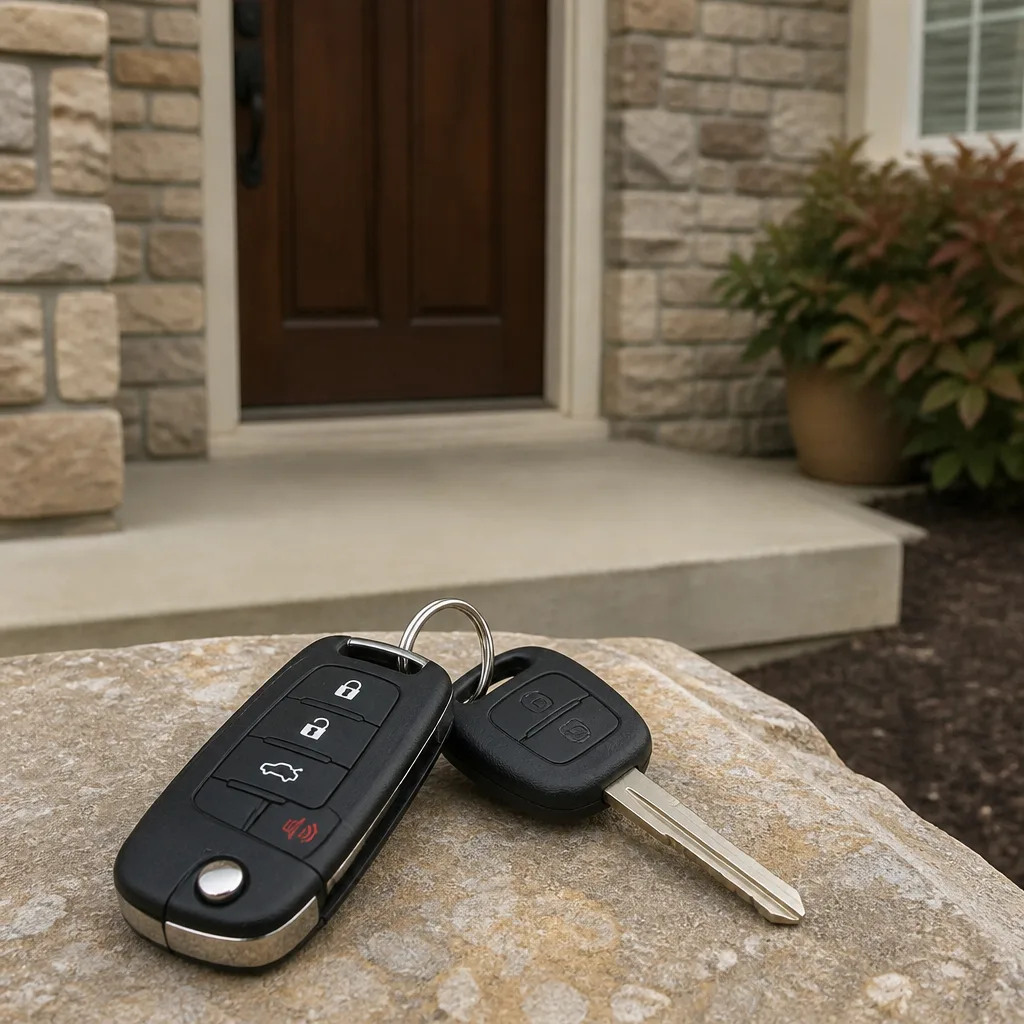 Car keys & fobs
Non-destructive entry first, always - and we re-key Schlage, Kwikset, and Baldwin locks on the spot while you watch
You get a price before we start. It does not change when we arrive. No surprises.
Get your free estimateCar Key Replacement Troubleshooting: Common Problems and How to Fix Them
Here’s a scenario we see in St. Johns more often than most drivers would expect. You get a new car key cut and programmed, it works fine in the parking lot, and then three days later the car won’t start. Or it never starts at all, even though the key turns in the ignition and the lock buttons work. The tech who did the job shrugs and says to bring it by again. You’re told it’s probably a weak battery or “one of those things.” It’s not one of those things. A replacement key that doesn’t work is a diagnostic signal, and it points to one of four specific gaps in the process: the wrong blank, incomplete programming, an immobilizer mismatch, or dead fob electronics. Our The Complete Car Key Replacement Guide for St. Johns Homeowners walks through all four, shows you how to identify which one you’re dealing with before you call anyone back, and explains what to ask a locksmith before the work starts so you don’t end up chasing the same problem twice. So whether you’re troubleshooting at home or running this same conversation with a shop, you’ll know exactly what questions to ask – and what answers to accept.
Quick Answer
Most car key replacement failures fall into one of four categories: the wrong key blank was used, the transponder chip wasn’t fully programmed, the immobilizer didn’t accept the new key’s code, or the fob battery died after programming. Testing each system in sequence (cut, chip, fob, receiver) will isolate the problem in under ten minutes, and most fixes don’t require replacing the key again.
Styles & brands we work with
Table of Contents
- The Four Failure Modes Behind a Replacement Key That Won’t Work
- How to Self-Test: Cut, Chip, Fob, or Receiver
- Why Aftermarket Blanks Cause So Many ‘Worked at First, Then Stopped’ Cases
- What to Ask a Locksmith Before They Start Programming
- When the Car Is the Problem, Not the Key
- How St. Johns Conditions Affect Key and Fob Performance
- Common Mistakes to Avoid
- When to Call a Professional
- Frequently Asked Questions
The Four Failure Modes Behind a Replacement Key That Won’t Work
When a customer in St. Johns calls us about a key that won’t work after replacement, the actual cause is almost always one of four things. Not five, not twelve. Four. Knowing which one you’re looking at changes everything about who you call and what you pay. When a customer in St. Johns calls us about a key that won’t work after replacement, the actual cause is almost always one of four things. Not five, not twelve. Four. Knowing which one you’re looking at changes everything about who you call and what you pay.
1. Wrong Key Blank
The blank is the physical metal shape of the key before it’s cut. It has to match your car’s lock cylinder profile exactly, not just “close enough.” A blank that’s a millimeter off will feel stiff in the ignition, might turn halfway, or might turn fully but not engage the electrical system. In some vehicles, it’ll open the door but not start the car. This is especially common on European makes and some newer Asian models where the keyway is intentionally narrow. The fix is straightforward: a new blank from the correct production series, cut on a proper machine.
2. Incomplete Transponder Programming
The transponder is a small chip embedded in the plastic head of the key. Most cars built after 1998 require this chip to transmit a code that the car’s immobilizer recognizes. Programming writes that code into the chip. If the programming sequence was interrupted, or the wrong software was used, the chip may transmit nothing at all, or transmit a partial code. The key will turn, the dashboard lights will come on, but the engine won’t crank. This is the most common failure mode we see after a DIY or quick-parking-lot replacement.
3. Immobilizer Mismatch
Your car’s immobilizer is a small computer that validates the transponder code before allowing the fuel pump and starter to engage. Programming a new key requires the immobilizer to accept the new code as authorized. If the technician’s software didn’t complete the “key registration” step, or if the car’s immobilizer memory is full (many vehicles hold only 4-8 keys), the new key won’t be recognized even if the chip received a code. The key is programmed, but the car doesn’t list it as valid.
4. Dead Fob Battery Post-Programming
This one fools people because the fob lights up. A dying or weak coin cell battery in the fob can power the little red LED but not the radio signal that locks and unlocks the doors remotely. On push-to-start vehicles, a weak fob battery can prevent the car from detecting the key entirely. We’ve seen replacement fobs shipped with cheap batteries already nearly depleted. It’s an easy fix, but it’s the last thing most people check because the light blinks.
How to Self-Test: Cut, Chip, Fob, or Receiver
You don’t need diagnostic equipment to narrow this down. You need five minutes and a methodical sequence. Run through these tests in order, and you’ll know which system is failing before you make a phone call.
- Test the cut first. Insert the key into the driver’s door lock. Does it go in smoothly? Does it turn left and right without resistance? If it’s stiff, won’t turn, or only goes in halfway, the blank or the cut is the problem.
- Test the ignition turn. With your foot off the brake, turn the key to the “on” position (not start). Do the dashboard lights come on? If yes, the mechanical cut is likely fine. If no, the ignition cylinder isn’t recognizing the key, which still points to the cut or blank.
- Test the transponder. This is the fork in the road. Turn the key to “start.” If the engine cranks but won’t fire, that’s a transponder or immobilizer issue. If the engine does fire and runs, the transponder is working.
- Test the fob electronics. Stand within 10 feet of the car and press the lock/unlock buttons. If the doors respond, the fob’s radio chip and battery are working. If not, try holding the fob against the start button (for push-to-start cars) or against the ignition cylinder. If the car responds that way, the fob battery is weak.
- Test the receiver. If a known-good physical key and a working fob both fail, the car’s receiver module or immobilizer antenna may be the issue. This points to a vehicle-side fault, not a key problem.
Why Aftermarket Blanks Cause So Many ‘Worked at First, Then Stopped’ Cases
There’s a pattern we’ve seen across St. Johns and most of northeast Florida, and it’s worth understanding before you accept a low-ball key quote. Cheap aftermarket key blanks are manufactured to approximations of OEM specifications. They’re not identical; they’re “close.” A blank that’s close can be cut to fit the lock cylinder, pass the turn test, and even work for a week or two. Then the marginal differences catch up: the brass is softer and wears faster, the transponder chip is rated for fewer read cycles, or the chip’s code is a clone of a clone. All of a sudden the car won’t recognize the key, and the “savings” evaporates into a second service call.
This is why we choose blanks deliberately. Aftermarket blanks are fine for some older vehicles with simple transponders. For late-model cars with rolling-code immobilizers, proximity detection, or encrypted chips, an OEM or OEM-equivalent blank is the only thing that holds up. We keep both in stock and we’ll tell you which one your car actually needs. The same goes for the vehicles most common around St. Johns: Toyota, Ford, Honda, Chevrolet, and Jeep all show up in our service area, and each has its own tolerance for aftermarket components. If a technician quotes you a very cheap replacement, ask whether the blank is OEM or aftermarket, and whether the car’s system is compatible with what they’re using. For Choosing the Right Locksmith Brand: A Buyer’s Guide for St. Johns, see our detailed breakdown.
What to Ask a Locksmith Before They Start Programming
The single best predictor of whether a car key replacement works the first time is the software the technician has. Not their attitude, not their van, not their Google rating. The software. Here’s what to ask before you hand over the keys:
- “Do you have dealer-level programming software for my make and model year?” Most modern vehicles (2015 and newer) require software that can write to the immobilizer’s key memory directly. If the tech says they’ll “try” or “should be able to do it,” that’s not a yes.
- “Can you program a new key if all keys are lost, or only when I have a working key?” These are different procedures. All-keys-lost programming requires pulling the immobilizer PIN or using a bypass module. Not every locksmith has this capability. If you’ve still got one working key, the job is easier, but the technician should be able to do both.
- “Is this a clone key or an on-board programmed key?” A clone copies the code from your existing key’s chip. It works, but it can’t be registered as a distinct key. On some vehicles, cloning triggers issues with remote start or immobilizer counts. It’s fine for some drivers and wrong for others. Get a straight answer.
- “What happens if it doesn’t work?” A real professional will have a re-program sequence, a diagnosis path, and a policy for rework. If the answer is a shrug, that’s the answer.
Kingsley Locksmith works across the full brand range from car key replacement in St. Johns to high-security lock systems, and the same principle applies whether we’re dealing with a Toyota transponder or a Medeco cylinder: the right tooling matters more than anything else. We’ve seen Kingsley Locksmith home service calls where the customer paid for two or three failed keys from other providers before finding someone with the correct programming equipment for their specific car. When you’re comparing shops, ask the software question first. It saves you money and it saves us a longer first visit.
When the Car Is the Problem, Not the Key
Sometimes a replacement key is perfect and the car still won’t start. That’s the scenario that confuses everyone, including some technicians. Here’s how to spot it: you get a replacement key with a confirmed working transponder, the mechanical cut is correct, and a second key (if you have one) starts the car. The new key won’t. This can mean the immobilizer’s key memory is full. Many vehicles store a fixed number of registered keys, and if that memory is full, new keys can’t be added until old entries are erased or the ECU’s key list is reset.
A corrupted ECU key memory is less common but possible. It can happen after a failed programming attempt, a voltage spike during jump-starting, or when a non-OEM programmer writes partial data to the vehicle’s body control module. Symptoms include: a previously working key that suddenly stops, multiple replacement keys that all fail, or a car that occasionally starts fine and then won’t start for hours at a time. This is a vehicle-side repair that requires pulling the ECU data, clearing the key memory, and reprogramming all keys from scratch. It’s not something a roadside key cutter can fix. It’s a service we perform in-field in St. Johns, and it usually takes under two hours once the vehicle is connected to our programmer. We’ll tell you honestly if your car needs this; we don’t replace keys that don’t need replacing.
How St. Johns Conditions Affect Key and Fob Performance
St. Johns sits in a humid, subtropical climate zone. That detail matters more than most drivers realize. The air is salty near the coast, humid inland, and hot for eight months of the year. Fob electronics don’t love any of that. We’ve opened key fobs in St. Johns that looked like someone left them in a salt bath. Corroded battery contacts, rusted circuit board traces, swollen button membranes. These aren’t manufacturing defects; they’re environmental exposure. A car key that lives in a pocket, a beach bag, a glovebox near the coast is taking on moisture every day.
Here’s what that means for troubleshooting. If your replacement key worked fine, then progressively got worse over weeks, and now only works when you hold it at a certain angle, you’re probably looking at battery contact corrosion inside the fob. Not the chip, not the programming. Opening the fob (carefully; many modern fobs are sealed) and cleaning the contact with isopropyl alcohol often fixes it. If the key was fine one day and dead the next after being dropped in water or left on a patio table overnight, the microphone-sized chip inside may have shorted. Salt air near the St. Johns River and the Intracoastal makes this worse, and homes in neighborhoods like Julington Creek, Durbin Crossing, and Fruit Cove deal with it more than drivers further inland. It’s one of the reasons we tell St. Johns customers to keep a spare fob wrapped or bagged during the summer months if they’re parking outdoors for long stretches.
Heat is the second factor. Florida trunk and dashboard temperatures can exceed 140°F in July. Fob batteries are rated for a range, and sustained heat shortens their life. A coin cell that would last three years in a cooler climate might last 18 months here. If your replacement key is a year old and the remote range is shrinking (you have to be closer and closer to the car for it to unlock), the battery is dying on a Florida timeline, not a defect timeline.
Common Mistakes to Avoid
- Replacing the battery before testing the transponder. A dead fob battery means the lock/unlock buttons won’t work, but the transponder chip may still start the car. Test the mechanical key and transponder before you assume battery failure. We see drivers spend $80 on a fob battery replacement when the real issue is the chip was never programmed.
- Accepting “it just needs time to sync.” Modern car keys don’t sync on their own. If a technician tells you to wait a few days and it’ll start working, that’s not how immobilizers work. Either the key is registered or it isn’t.
- Using a duplicate of a duplicate. If your existing key was a clone, cloning it again clones the clone. Each generation loses a little code fidelity. On some vehicles, the third-generation clone won’t work at all. Ask for an on-board programmed key instead.
- Buying a replacement fob online without checking the part number. The fob for a 2016 Toyota Camry doesn’t work on a 2017 Camry. FCC IDs and internal part numbers matter. We keep a reference database for St. Johns customers, but if you’re ordering online, match the FCC ID printed on the back of your original fob.
- Ignoring a key that works “sometimes.” Intermittent failure is the clearest diagnostic sign there is. A key that works 9 times out of 10 is still going to fail when you need it most, usually in the rain, at night, in a parking lot. Don’t wait for a full failure to fix it.
- Assuming the key is bad when the car battery is dead. If the car won’t crank and the dashboard dims when you turn the key, you have a vehicle battery problem, not a key problem. We see this in St. Johns summer storms when cars sit for a week and the heat drains batteries faster than people expect.
- Choosing the cheapest programmer without checking equipment. A parking-lot key service might quote half the price, but if they’re using a universal programmer that “works on most cars,” your car may be one of the exceptions. Ask about their equipment before you okay the work.
When to Call a Professional
A car key replacement is a precision job, not a handyman task. If the self-test points to a transponder issue, an immobilizer mismatch, or a vehicle-side fault, call someone who can diagnose and fix it in one visit. Scenarios like a car that won’t accept any new key, a vehicle with all keys lost, a key that starts the car but won’t unlock the doors remotely, or a fob that worked before programming and doesn’t after, all need programming equipment and electrical diagnostic tools. If the car starts intermittently and you’re chasing the problem, stop chasing it; bring it to someone who can pull the codes and see what the immobilizer is actually reporting.
If you’re in St. Johns or anywhere in the surrounding area, our team is set up for exactly this. Kingsley Locksmith specializes in Car Key Replacement services on-site, including vehicles where a previous shop failed. We don’t charge for phone diagnosis. Call us at (855) 360-5957, describe what the key is doing, and we’ll tell you honestly whether it’s the key, the fob, the programming, or the car itself, before you spend a dollar on parts. For St. Johns drivers, it’s faster than a dealership and a lot less expensive than towing.
Frequently Asked Questions
That’s a transponder programming failure. The mechanical cut is correct, so the key turns, but the chip inside the key either has no code or a code the immobilizer doesn’t recognize. The fix is re-programming the key to the car’s immobilizer using the correct software for your make and year. It’s a ten-minute job with the right equipment.
Most reprogramming corrections range from $50 to $150 in the St. Johns area, depending on the vehicle and whether the immobilizer key memory needs to be cleared first. A new key blank with chip programming typically runs $150 to $350. Get a full quote up front, including any re-programming, before anyone starts. Call (855) 360-5957 for an exact quote on your vehicle.
Yes, but not every locksmith. All-keys-lost programming requires pulling the immobilizer’s PIN code or using a bypass module that can erase and rebuild the key memory. At Kingsley Locksmith in St. Johns, we do this in-field for most makes and models. No tow, no dealership. The car stays in your driveway.
On push-to-start vehicles, yes. A weak fob battery weakens the radio signal the car uses to detect the key. The car may not detect the fob at all, even if the fob’s LED still lights up. On traditional keyed ignition vehicles, the transponder chip has its own passive power source, so a dead fob battery won’t prevent starting, only remote lock/unlock.
Intermittent failure points to one of three issues: a marginal aftermarket blank, a fob battery on its last legs, or a worn ignition cylinder that’s finicky about key tolerances. If the car starts fine with your original key but only sometimes with the replacement, the replacement blank or chip is likely the problem.
Most replacements take 30 to 60 minutes on-site, including cutting, programming, and testing. Some late-model vehicles with encrypted immobilizers take longer. We do the work in your driveway or parking lot in St. Johns; you don’t need to tow the car anywhere. We’ll give you a time estimate when you call, and it won’t change when we arrive.
The Bottom Line
A replacement car key that won’t work is a solvable problem. It’s never random, and it’s never something you should have to live with or wait out. The failure is either in the cut, the chip, the fob electronics, or the car’s receiver, and a methodical test sequence will tell you which one. Aftermarket parts cause a disproportionate share of failures, but they’re not the only culprit. The best protection is to ask the right questions before the work starts, and to fix the issue as soon as it shows up. For more guides & resources, visit our blog. If you’re in St. Johns and you’re done chasing a key that works when it feels like it, call Kingsley Locksmith at (855) 360-5957. We’ll diagnose it straight, tell you the real cost, and get the key working. On-site, on time.
Written by the team at Kingsley Locksmith, serving St. Johns since 2016.