

Last updated October 30, 2026
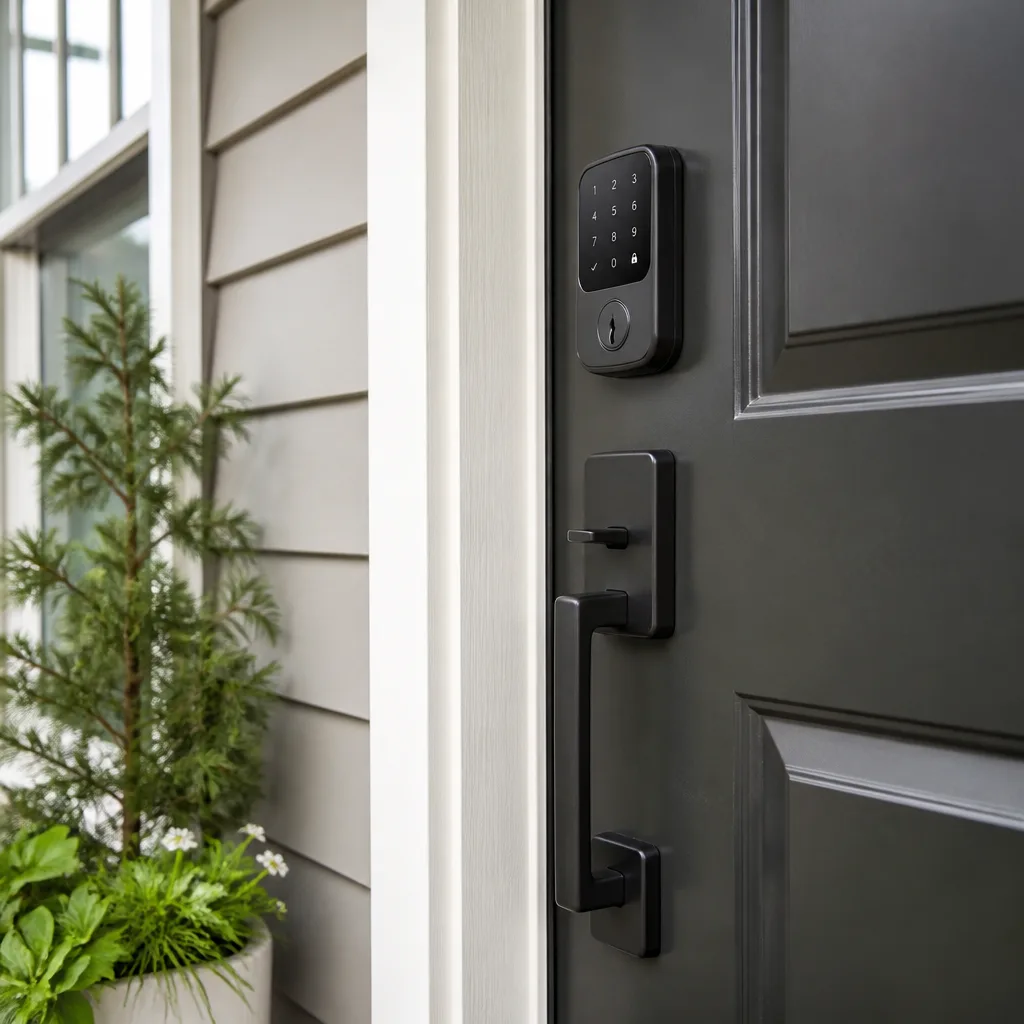 Smart locks
 House lockouts
 Re-keying
 Deadbolt upgrades
 Schlage
 Kwikset
 Car keys & fobs
Non-destructive entry first, always - and we re-key Schlage, Kwikset, and Baldwin locks on the spot while you watch
You get a price before we start. It does not change when we arrive. No surprises.
Get your free estimateLocksmith Permits, Codes & Inspections in FL: What You Need to Know
Most homeowners assume locksmith work is invisible to the building department. Swap a deadbolt, rekey after a tenant moves out, duplicate a car key – none of that requires a permit in Florida. But that assumption breaks down fast once you add electronic access control, modify a commercial door, or touch fire-rated hardware. In St. Johns, we’ve seen rental property owners install smart locks on fire-rated doors without realizing that hardware choice just invalidated their fire door certification. This guide walks through exactly where the permit line sits, which Florida codes actually apply, and what documentation you should keep – so you don’t discover the problem during a resale inspection or an insurance claim. For Locksmith Warning Signs: A St. Johns Homeowner’s Reference Guide, see our companion post.
Quick Answer
Standard residential locksmith work – rekeying, deadbolt installation, knob and lever swaps – is permit-exempt in Florida. Permits and contractor licensing only enter the picture when the work involves electrical wiring (electric strikes, maglocks), structural door modification, fire-rated door hardware, or access control systems on multi-unit and commercial properties under Florida Building Code Section 1008.
Styles & brands we work with
Table of Contents
- Which Locksmith Work Is Permit-Exempt in Florida
- When Lock Work Crosses Into Licensed Contractor Territory
- Florida Building Code Section 1008: Egress Rules That Affect Your Locks
- Chapter 493 vs. Contractor Licensing: Two Different Legal Worlds
- St. Johns County Inspection Considerations for Door Hardware
- Documentation to Retain After Any Lock Installation
- Insurance and Resale: Why Hardware Documentation Matters
Which Locksmith Work Is Permit-Exempt in Florida
Here’s the cleanest way to think about it: if the work only touches the lock cylinder, the latch, or the strike plate – and the door, frame, and wiring stay untouched – no permit is required anywhere in Florida. That covers the vast majority of what a residential locksmith does day to day.
Permit-exempt work in Florida includes:
- Rekeying existing locks – removing the cylinder, changing the pins, cutting new keys. The door is never altered.
- Deadbolt installation into an existing bore – if the door already has the 2-1/8″ cross bore and 1″ edge bore, swapping in a new deadbolt is a hardware swap, not construction.
- Knob, lever, and handle set replacement – same bore requirements, same exemption.
- Mailbox lock replacement – no building permit requirement.
- High-security lock cylinder upgrades – installing a Medeco, Mul-T-Lock, or Abloy cylinder into an existing mortise or cylindrical lock body doesn’t modify the door.
- Electronic deadbolts that are battery-powered and surface-mounted – think a Schlage Encode or Yale Assure on an existing prep. No hardwiring, no permit.
What surprises people in St. Johns is that brand alone doesn’t trigger a permit. A Baldwin mortise lockset on a new bore is permitted work if the door prep requires cutting. The same Baldwin lockset installed into an existing mortise pocket is exempt. The distinction is always the scope of physical alteration, not the hardware cost or complexity.
Our experience in St. Johns homes, especially the newer developments off County Road 210 and Nocatee, is that doors ship from the factory with standard preps. That makes most residential lock work genuinely exempt. The trouble starts when a homeowner wants something the door wasn’t prepped for: a mortise lock on a door that only has a cylindrical bore, a panic bar on a residential entry, or any lock that requires routing new material.
When Lock Work Crosses Into Licensed Contractor Territory
The line is more precise than most people expect. Florida law treats lock installation as construction work once it involves any of these:
- Electric strikes and magnetic locks (maglocks) requiring hardwired power – any lock that connects to building AC wiring, a low-voltage system with a transformer, or a fire alarm integration is electrical work under Florida Building Code.
- Door frame modification – cutting a new strike pocket, mortising a frame for an electric strike, or welding door reinforcement plates alters the structural assembly. This requires a contractor’s license in most Florida jurisdictions.
- Panic hardware and fire exit hardware installation – cutting vertical rods, installing rim panic bars on a rated door, or modifying the door to accept exit devices. This is code-governed work under Section 1008, not a hardware swap.
- New door prep beyond standard bores – routing a mortise pocket where none existed, drilling a lateral raceway for horizontal locks, or boring an oversized hole for a mortise cylinder.
- Access control systems with door position switches, request-to-exit motion sensors, or network cabling – any component tied into a building’s fire alarm or security infrastructure.
- Fire-rated door assemblies – swapping hardware on a labeled fire door changes the door’s listing. The door assembly label is only valid with the exact hardware specified in the manufacturer’s fire listing.
In practical terms: if a St. Johns rental property owner asks us to install an electric strike on a condominium entry door, that work sits in licensed electrical/electrician plus door contractor territory. We advise the owner to pull it into the scope of a licensed contractor. Where Kingsley Locksmith fits is on the mechanical hardware side – the lockset, the cylinder, the keying system – not the wiring. We say plainly where our scope ends. That clarity is uncommon in the trade and we think it’s the only responsible way to operate.
Here’s the numbered decision path we use when a customer asks “does this lock installation need a permit in St. Johns?”
- Does the installation require cutting, routing, boring, or modifying the door or frame beyond the existing hardware prep? If yes, this is construction work requiring a contractor’s license and likely a permit.
- Does the lock require connection to building electrical or low-voltage wiring? If yes, an electrical contractor’s license and permit are required.
- Is the door fire-rated or part of a rated assembly? If yes, hardware must match the door’s fire listing and any change requires documented compliance.
- Is the property commercial, multi-family (3+ units), or used as a rental? If yes, assume stricter interpretation. Even if the work is technically exempt, the building official may flag it during an inspection if documentation is missing.
- Is it a standard single-family residential lock swap or rekey on an existing prep with no wiring? If yes, permit-exempt. Document it anyway and move on.
This decision path keeps homeowners out of trouble, and it’s the same logic a St. Johns building official will apply during a Certificate of Occupancy or re-sale inspection.
Florida Building Code Section 1008: Egress Rules That Affect Your Locks
Section 1008 of the Florida Building Code governs means of egress – how people exit a building in an emergency. It’s the reason your front door deadbolt must open from the inside with a single motion, no key required. It’s also the code section most often violated by well-meaning DIY smart lock installations.
The core egress requirements that affect lock selection:
- Egress doors must open from the inside without a key, tool, or special knowledge. A deadbolt with a thumb-turn is compliant. A deadbolt requiring a key from inside is not. This applies to every exterior door in a single-family home and becomes more rigorous in any rental or multi-unit setting.
- Night latches, flip locks, and chain guards are prohibited on egress doors in any occupancy other than single-family residential if they require two separate operations to open. Even in single-family homes, a chain that traps you during a fire is a code violation.
- Smoke and fire separation doors in multi-family buildings cannot have a deadbolt from the interior side. This is where we regularly see violations in St. Johns condominium and apartment communities: a maintenance tech or resident installs a standard deadbolt on a fire-rated corridor door, not realizing the assembly’s label just got voided.
- Panic hardware requirements in assembly and educational occupancies: if the door serves 50 or more occupants and is a required exit, the Florida Fire Prevention Code requires panic hardware. That’s not a residential locksmith call – that’s a licensed door contractor project.
- Door swing and opening force: exterior egress doors must open outward for certain occupancies and require a maximum opening force under 30 pounds for accessible routes. Locks with heavy spring mechanisms or improperly installed closers fail this.
For the St. Johns homeowner adding an electronic lock to a rental unit or a home business, the takeaway is this: a battery-powered smart deadbolt with a thumb-turn inside is generally compliant on a standard single-family door. But a smart lock with no mechanical thumb-turn, or one that slips into an automatic relock mode that delays egress, creates a code conflict. We’ve seen St. Johns short-term rental owners install auto-locking smart locks that re-engage after 10 seconds – a guest in an emergency fumbling with a touchscreen violates the intent of Section 1008.
The safest approach: any electronic lock on an egress door should have a physical, mechanical interior release that operates with zero power and zero thought. If it doesn’t, it doesn’t belong on an egress door in Florida, regardless of how convenient the app is.
Chapter 493 vs. Contractor Licensing: Two Different Legal Worlds
Florida’s locksmith licensing law falls under Chapter 493 of the Florida Statutes – the same chapter that governs private investigators, security guards, and repossession agents. A Chapter 493 locksmith license authorizes the licensee to sell, install, service, and rekey locks. It does not authorize construction work.
Here’s the distinction that matters:
- A Chapter 493 locksmith license is a security industry license. It covers access to lock hardware, keying, and the trust element of working with security systems. It requires a background check, but it says nothing about door frames, electrical wiring, or fire code compliance.
- A Florida contractor’s license (CGC, CCC, EC, or specialty door contractor) is a construction industry license. It authorizes the physical modification of the building – cutting concrete, modifying frames, running electrical, altering fire rated assemblies.
When a locksmith installs a mortise lock into a door that needs new routing, they are performing work within contractor territory. The Chapter 493 credential doesn’t extend to that. In practical terms, this is why reputable locksmiths in St. Johns subcontract door prep woodwork or frame modification to a licensed general contractor, or stay strictly within existing prep work.
The law gets even more specific for access control. Florida Statute 489.503 defines electrical and alarm system contracting. A person installing a low-voltage access control panel that ties into a fire alarm is performing electrical contracting work under Florida law – regardless of whether they hold a locksmith license. The correct path is an EC (electrical contractor) or EF (specialty fire alarm) licensed contractor handling the alarm integration, with the locksmith handling the mechanical cylinder and keying.
What this means for a St. Johns commercial property owner: when you hire a locksmith who says they can “do everything” – wire the electric strike, install the maglock, cut the door, and key the cylinder – you are hiring someone who is likely operating outside their licensed authority for at least part of that scope. The work might function fine for a year. Then the building inspector shows up for an unrelated re-inspection and red-tags the door. Or the insurance adjuster reviews the claim file and finds unlicensed electrical work on the door that failed during a fire. That’s a denial letter, not a payout.
St. Johns County Inspection Considerations for Door Hardware
St. Johns County’s Building Department operates under the Florida Building Code with local amendments. Having worked across the county – from Ponte Vedra Beach to Fruit Cove to the newer communities south of State Road 16 – we see a consistent set of door hardware issues flagged during Certificate of Occupancy inspections on new construction and during re-inspections on remodels.
What St. Johns County inspectors commonly flag in our experience:
- Front-entry doorsets that don’t match the approved plan hardware schedule. St. Johns County reviews door hardware schedules as part of the permit package. If the doorset installed at final inspection differs from the permitted schedule – even a brand change from a Baldwin to a builder-grade imported knobset – the inspector can withhold the CO until the hardware matches the approved plans.
- Deadbolts on doors between the garage and the living space. Florida Building Code treats the garage as a separate hazard area. The door connecting garage to residence must be fire-rated (typically 20-minute) with a self-closing device. Adding a deadbolt that wasn’t specified in the fire door listing can void the rating.
- Locks on doors serving as required egress in bonus rooms and home offices. St. Johns building officials look for any lock that requires a code, key, or special operation on the interior side. A thumb-turn is fine; a keypad with no mechanical override is not.
- Gate locks on pool enclosures. Chapter 454 of the Florida Building Code includes specific requirements for pool barrier gates, including self-latching mechanisms and placement height. Locks on pool gates that don’t meet the barrier requirements are a frequent correction item.
- Strike plate and hardware alignment on new construction. We see it in every St. Johns subdivision from Shearwater to Durbin Crossing: doors that settle within the first year and latches that no longer align. While not a code violation, a properly installed strike with a reinforced security plate is a frequent re-inspection item when the door sticks or fails to latch.
Our advice for homeowners closing on new construction in St. Johns: photograph every door’s hardware, keep the builder’s hardware schedule, and if you change anything in the first year, keep the original hardware. For year-round upkeep tips, see our Seasonal Locksmith Care for St. Johns: Year-Round Homeowner’s Guide. The warranty walkthrough and any subsequent re-inspection go smoother when the file is intact.
We mention Kingsley Locksmith’s home base in St. Johns here because these inspection patterns are the kind of detail you only learn by being local – by driving past the same builder communities, hearing from the same inspectors, and seeing the same correction lists. It’s not the kind of thing that appears in a generic Florida code guide.
Documentation to Retain After Any Lock Installation
Whether the work was permit-exempt or permitted, documentation is what protects you later. At resale, during an insurance adjustment, or when a St. Johns County inspector asks a question five years after installation, the paperwork is the difference between a smooth process and a costly mystery.
Keep a file for any lock installation that involves electrical wiring, door prep modification, or access control:
- The contractor’s written scope of work. What exactly was installed, modified, or wired. A one-page scope statement signed by the contractor is what a building official wants to see.
- Permit number and inspection sign-off, where applicable. If a permit was pulled for the electrical or door frame component, keep the permit and the final inspection approval.
- Manufacturer fire listing documentation, where applicable. For fire-rated doors, the hardware must match the door’s fire listing. Keep the door manufacturer’s listing sheet showing the compatible hardware.
- Brand and model numbers of every lock and cylinder installed. This is important for high-security systems – Medeco, Mul-T-Lock, Abloy – where key control and patent protection live in the documentation. A Baldwin mortise lock installed without recording the model and keyway is a headache when you need a matching cylinder in year six.
- Keying schedule. A simple chart showing which keys open which doors, and the number of masters and change keys. This is critical for multi-unit properties and for any home where multiple locks are keyed alike.
- Photographs of the installed hardware, interior and exterior. Dated photos are cheap insurance and settle arguments about what was installed when.
At resale in St. Johns, a home inspector will not fail a house for a smart lock. But a home inspector will note when a fire-rated door has hardware that appears inconsistent with the label, or when an access control pad shows signs of amateur wiring. That note becomes a negotiation point. A good paper file answers it in two minutes. A missing file turns a $200 correction into a $2,000 concession.
Insurance and Resale: Why Hardware Documentation Matters
Florida homeowners already pay the highest insurance premiums in the country. The last thing you need is a claim denial rooted in undocumented door hardware.
Here’s what we’ve seen play out in St. Johns and across Florida:
- Fire claims where a smart lock on a fire-rated door triggered a denial. The insurance carrier’s position was that the fire-rated door assembly had been modified without permits or documentation, contributing to the spread. The homeowner’s argument that the lock was “just a smart lock” didn’t survive the adjuster’s review.
- Break-in claims on rental properties where unlicensed electrical work was discovered on an access control system. The carrier denied the forced-entry portion of the claim, citing the unpermitted electrical work as a material change to the property’s security posture.
- Resale transactions where missing lock documentation delayed closing until an electrician inspected the strike wiring and a door contractor re-certified the fire door. We watched one St. Johns sale push 21 days for exactly this reason. The work was probably fine. The paperwork didn’t exist.
If you own a rental property in St. Johns and you’ve added electronic locks or access control, your insurance carrier wants to know. Not because they’ll object – but because they’ll underwrite the property differently. Omit the change and file a claim later, and you’ve handed the adjuster a reason.
The threshold question: “Would a reasonable person consider this lock installation a material change to the property?” If the answer is yes – because of wiring, door modification, or access control – document it and notify the carrier. If the answer is no – a simple rekey or deadbolt swap on existing prep – then no action beyond keeping the invoice is needed.
Our rekeying service in St. Johns always includes a keying schedule because we know property managers and homeowners need that document at turnover and at sale. It’s the kind of detail that costs nothing to provide and everything to omit.
Common Mistakes to Avoid
- Installing a keyed deadbolt on the interior side of an egress door. This violates Florida Building Code Section 1008 and is the most common code violation we see in older St. Johns homes where a previous owner added “security” to the back door.
- Putting a smart lock with no mechanical thumb-turn on a rental unit. A guest fumbling with a dead battery in a fire is a code violation and a liability. The interior release must be mechanical and power-free.
- Boring a new mortise pocket yourself to upgrade to a Baldwin or mortise-style lock. The moment you cut into the door, you’re doing work that should be handled by someone who knows the door’s construction and the local permit requirements.
- Replacing hardware on a fire-rated door without checking the door’s fire listing. Fire door labels are only valid with specific hardware. Swap a lever for a different brand and the 20-minute rating can disappear, which a St. Johns inspector or an insurance adjuster will notice.
- Assuming a Chapter 493 locksmith license authorizes electrical access control work. It doesn’t. Electric strikes, maglocks, and wired access panels are electrical contracting in Florida, and unlicensed work here is a claim-denial coin flip.
- Losing the hardware documentation after a lock upgrade. The keying schedule, model numbers, and contractor scope are what you hand the buyer, the inspector, or the adjuster. Without them, a $300 lock job becomes a $3,000 problem.
- Trusting the cheapest bid on access control for a commercial door. The bid that doesn’t mention the permit, the fire alarm interface, or the door rating is a bid that hasn’t priced the actual job. You’ll pay the difference eventually.
When to Call a Professional
If the lock installation requires new door prep, touches electrical or low-voltage wiring, involves a fire-rated door, or is being installed on a commercial or multi-unit property – call someone who can speak confidently about permit boundaries before any work starts. The right professional will tell you where their scope ends, which trade needs to be involved, and what paperwork you’ll want in the file. That conversation is cheap compared to a failed inspection or a denied claim.
If you’re in St. Johns and want a straight answer about whether your lock project is permit-exempt or not, call us before you cut, wire, or buy hardware. Kingsley Locksmith offers free estimates in St. Johns – call (855) 360-5957.
Frequently Asked Questions
No. Rekeying an existing lock in a single-family home is permit-exempt everywhere in Florida, including St. Johns County. The work involves changing the pins inside the cylinder, not modifying the door, frame, or any electrical system. Rekeying is a hardware service, not construction. Rekey Locks in St. Johns is available when you need it done quickly and documented.
Yes, as long as the smart lock installed on an egress door has a mechanical thumb-turn or lever on the interior side that operates without power, keys, or special knowledge. A hardwired electric strike is a different situation – that’s electrical work requiring a licensed contractor. Battery-powered smart deadbolts on existing door prep are permit-exempt.
Florida requires a Chapter 493 locksmith license for lock installation and rekeying services. A contractor’s license is only required when the work crosses into construction territory: door prep beyond existing bores, frame modification, electrical wiring, or fire-rated assembly work. The two licenses are separate, and holding one does not authorize the work of the other.
Florida Building Code Section 1008 governs means of egress – the rules for doors, locks, and hardware along the exit path. The core requirement for locks is that egress doors must open from the inside without a key, tool, or special knowledge. It also sets requirements for panic hardware, opening force, and fire door hardware compatibility.
Yes, during a Certificate of Occupancy inspection on new construction or a re-inspection on a remodel, the inspector can flag lock hardware that doesn’t match the approved plans, violates Section 1008 egress rules, or compromises a fire-rated door assembly. This is more common on new construction and multi-unit properties than on an existing single-family rekey.
Keep the contractor’s written scope, any permit and inspection sign-off, the manufacturer’s fire listing if the door is rated, brand and model numbers for every lock and cylinder, a keying schedule, and dated photos of the installed hardware. This file answers inspector questions, insurance adjuster inquiries, and buyer requests at resale.
Pool barrier gates in Florida fall under Chapter 454 of the Florida Building Code, which requires self-latching mechanisms and specific placement heights. Installing a lock on a pool gate isn’t necessarily permit-triggering, but it must comply with the barrier code. If the lock prevents proper self-latching or is installed at the wrong height, a St. Johns inspector can flag it.
Both trades often need to be involved. The electric strike wiring and low-voltage connection are electrical work under Florida law, so a licensed electrical contractor should handle that portion. A locksmith can supply and fit the compatible lock hardware and keying. The right sequence is electrical first, locksmith second, with both scopes documented.
The Bottom Line
Most locksmith work in Florida is genuinely permit-exempt: rekeying, deadbolt swaps on existing prep, and standard hardware replacement. The moment the work involves door modification, electrical wiring, access control systems, or fire-rated hardware, you’ve crossed into a world of permits, contractor licenses, and code compliance that a Chapter 493 locksmith license alone doesn’t cover. Keep documentation for anything beyond the basics. In St. Johns, where inspection schedules and insurance scrutiny are both rigorous, a clean paper file and a clear-eyed understanding of where the permit line sits will save you money and aggravation.
Get a Straight Answer Before You Cut, Wire, or Buy
The fastest way to know whether your lock project in St. Johns is permit-exempt is to describe it to someone who works with these distinctions daily. Call (855) 360-5957 for a free estimate and a clear answer on permit requirements, hardware compatibility, and documentation. Free estimates are available across St. Johns – from car key replacement to emergency lockout response to full-property rekeying. We work on the locks most locksmiths won’t.
Written by the team at Kingsley Locksmith, serving St. Johns since 2016.